
For my Digital Artefact, I’ve decided that I want to make a YouTube channel that focuses on Movies. My videos will consist of commentary about a subject of film, with clips of the subject played over top of it. Events surrounding film, internet reactions to a film, analysis videos, and movie reviews are all video topics I want to explore. I also want my content to have a unique editing and structural style to them, not replicating but borrowing elements from YouTubers Internet Historian and NakeyJakey. My project will also branch out to other platforms which include Reddit, where I can create threads to discuss film related topics, and Letterboxd where i’ll be posting my movie reviews.
Category: Uncategorized
BCM115- REBEL VIDEO
REBEL VIDEO-
https://www.youtube.com/watch?v=6Dd0G2FcrEk
STATEMENT-
My Chosen Rebel-
In my 1-2 Minute Clip, I decided I wanted to film, interview, and explore one of my good mate’s (Kane Dezius) passion and hobby. Ever since we were young we’ve both been interested in cars but him more so than me. I started to look at other things like cinema while he kept his devotion towards cars. I thought this was very interesting as I believe he sees cars the same way i see film and it’s quite obvious he feels very strongly about his hobby. So I thought that Kane would make a good subject for our theme of rebel. Kane always says he never cares what anyone else thinks of his car or what they tell him to do with it. His car is his and he wants to keep it that way, and not let other people’s opinions persuade him on what to do with it. People also often see his hobby as a bit rebellious as fast cars usually means temptations to go fast. Although his hobby and his actions may be rebellious, I often see passion for something as a form of rebellion. Even though someone may not agree or relate to a passion, no-one will or can stop you from having it.
After I convinced him to be apart of my project, we worked on a rough outline of the questions I would ask him and how he would respond to them:
Questions-
1- What are your interests
- Cars (JDM)
- Mechanical side
- Fixing cars
- Appearance of cars
- Speeding
2- What’s the draw behind cars
- Started from a young age (toy cars)
- Movies and Youtube (fast and furious)
- Finding out which car is which
- Finding out what cars and styles I was into
3- What is your current car? Have you owned any prior?
- Nissan Navara
- BRZ (what have you done to it?)
4- Would you consider this your passion?
- Where other people’s hobbies are things like fishing, photography or filming, mine is cars and whether it might be behind the wheel or being in the shed fixing or adding parts to make my car mine.
- Happy place
After we worked out the questions and answers, we worked on a shot-list. Before shooting I looked over some videos that focus on cars (JDM specifically) and kept in mind the shots that were common in those videos. For example, A shot taken of the rims of Kane’s car was inspired by this clip. Some other clips I took inspiration from include:
- https://www.youtube.com/watch?v=BDCU5OFXZ2c
- https://www.youtube.com/watch?v=_Qp2qj1n0Ug
- https://www.youtube.com/watch?v=M2VSTnS29wc
We also looked at how cars were photographed and integrated that into the footage. Kane has an Instagram page dedicated to his car so he had quite alot of knowledge on how cars are usually filmed.
Shots-
Close-ups of different parts of the car
- Rims
- Spoiler
- Skirts
- Exhaust
- Front and rear of car
- Side of car
Opening and closing shots-
- Opening: Kane leaned against car facing away from the camera
- Closing: Kane leaned against car facing toward the camera
Location/s-
- Rouse Hill regional park
- Quiet road
- The Ponds (Suburb)
Music-
- Mandumaz- Endless in between (Kid Sleepi remix)
I first shot the interview which I think went quite smoothly, although the footage from the interview was a little bit grainy which is why it wasn’t used in the final edit (Which i’m not too fussed about as I think having the opening shot and closing shot works better instead of cutting between him with the car and him just sitting in a room).
The second day of shooting was focused on Kane and the car. Everything went pretty smoothly during the day and all footage was usable. We did a night shoot but the camera we used to shoot wasn’t the greatest for low light shooting so most footage turned out grainy.
Reflection-
In hindsight, I really should have borrowed a gimbal. Most JDM videos use gimbals and adds a much more professional look to the video which I wish i could have gotten. If the time limit was longer i would have loved to do something similar to this video, where I could focus on both Kane and the people that he shares his love for cars with. Overall thought i’m pretty happy with how the footage audio, and edit turned out.
BCM113- The Ethics of Images
Ethics can be described as a set of standards of what is right or wrong. A group of principles or morals that can differ between person to person. Every person will have a different code of ethics or moral guidelines depending on their experiences and values. When it comes to journalism, journalists are faced with many ethical challenges (The MEAA has a set code of ethics which can be seen here). Although I find that the lines are most blurred when it comes to images. Photos taken by journalists aim to achieve awareness or cover a certain event or topic. Often images can be very divisive, (especially when the image is of a sensitive event) and can often lead to heavy criticism from the public, even if his or her intentions are good.
There are many photographs taken and published by photojournalists that are considered by many to be unethical. some examples include:
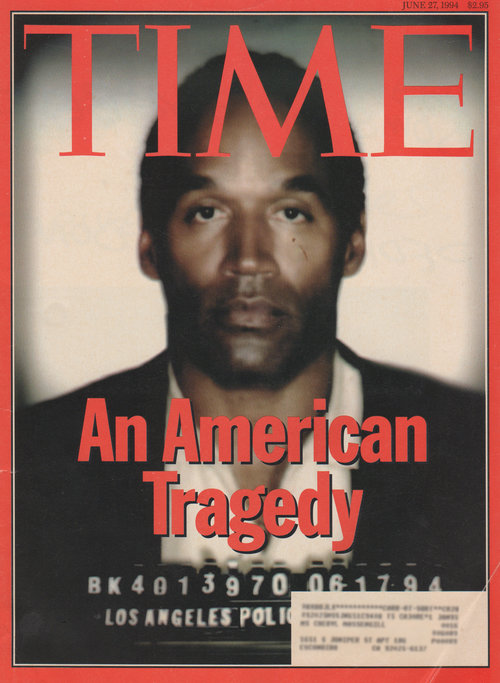
This photo depicts Oj Simpson after the alleged murder of his wife in 1994. The image was criticised after the illustrator purposely darkened Oj’s skin, intended to give a more dramatic tone but only caused more racial tension.
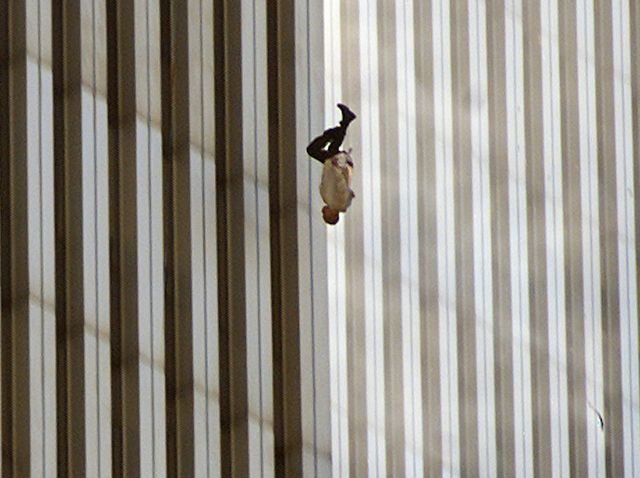
This photo was taken by Richard Drew during the 9/11 attacks and shows a man jumping out of the world trade centre, falling to his death. This photograph was heavily criticised and many believed it to exploit the man’s humanity and death.
When taking photographs, A journalist must ask themselves how their photos might be perceived by the general public and if the photos they have taken can be seen as ‘ethical’. In the MEAA’s code of ethics, the 9th and 11th codes state that Journalists must Present pictures and sound which are true and accurate. Any manipulation likely to mislead should be disclosed, and Respect private grief and personal privacy. If these codes aren’t followed, journalists risk provoking rage within the public and ultimately affecting their careers. Journo’s must ask themselves Important questions such as:
- Am I exploiting this person?
- Am i stripping them of their dignity?
- Am I invading their privacy?
- What about the person’s identity?
- Am i turning tragedy into leering?
These questions asked to oneself are all critical when it comes to photojournalism and the ethics that surround it. They must also keep different cultures in mind. What might be ethical in one country might be considered unethical in another. At what point can be be deemed ‘too much’? When does coverage lose its intended purpose?
While the images presented before all received backlash for various reasons, I believe that Kevin Carter is a very tragic example of how photojournalists and the ethical dilemma behind the photos taken by them can lead to backlash by the public. Kevin Carter was a photojournalist who in 1993 flew to Sudan to report and photograph the famine taking place. While there he photographed a starving girl crawling towards a feeding centre with a vulture behind her. He was specifically told not to touch any victims of the famine due to disease. The photograph was on the front cover of The New York Times and won the Pulitzer prize. Carter and his photograph were heavily criticised and debate began over whether or not he should have come to the child’s aid.

In 1994 Kevin Carter committed suicide due to the backlash received and the memories of his experiences. What happened to Kevin Carter is a tragic example of how images can cause ethical dilemmas in the sense of whether it was humane to take this photograph or not. Was this exploiting the girl’s suffering? Was this taking this too far? Is this photograph invading her privacy and what about her identity? What happened to her? While this photo brought awareness to the famine, the public was angered by the fact that he left the girl there to starve instead of helping. He created awareness which is the goal of any photojournalist but while doing so was considered by many to be morally incorrect due to his in-humanity. Do you believe Kevin Carter to be right or wrong in this situation? Everyone has different moral and ethical guidelines and answers may vary. In my opinion, at the end of the day, He was there to report, photograph and bring awareness to the famine and show the reality of the situation. People are very quick to judge without knowing the context and complete reality of the situation and this is what photojournalists need to be wary of.
Journalists intend to bring certain world events, tragedies, topics, and stories to attention in the public eye. To avoid criticism and backlash from the public audience, Journalists must ensure they ask themselves if the photos they have taken can be deemed ethical.
References
Chouliaraki, L & Blaagaard, B 2013, ‘Special issue: the ethics of images’ https://journals.sagepub.com/doi/10.1177/1470357213483228 [17 May 2019]
MEAA, ‘MEAA Journalist Code of Ethics’ https://www.meaa.org/meaa-media/code-of-ethics/ [17 May 2019]
Bronx Documentary Centre, ‘OJ Simpson’ http://www.alteredimagesbdc.org/oj-simpson [20 May 2019]
Keiper, A 2017, ‘An Ethical Analysis of the Falling Man’ https://medium.com/@andrewkeiper/the-first-hijacked-airliner-ripped-into-the-north-tower-of-the-world-trade-center-bringing-the-24c56624edaa [21 May 2019]
Arete Stories 2018, ‘Photography Ethics and Why They Matter’ https://www.photoethics.org/content/2018/5/31/photography-ethics-and-why-they-matter [21 May 2019]
Famous Photographers 2018, ‘Kevin Carter’
https://www.famousphotographers.net/kevin-carter [25 May 2019]
Time, ‘Starving Child and Vulture, Kevin Carter’ http://100photos.time.com/photos/kevin-carter-starving-child-vulture [25 May 2019]
BCM115 Sound assessment
Mitchell Baskerville 6476478
Foley / Fx- glass cracking, rustling, seat belt coming undone, car door, car crash, tires screeching.
Atmos- running engine, quiet road, rural area
Voice- Corey’s story, heavy breathing
Research-
https://www.youtube.com/watch?v=0GPGfDCZ1EE
https://www.youtube.com/watch?v=UO3N_PRIgX0
https://www.techradar.com/au/news/video/foley-the-art-of-movie-sound-effects-1301281
In this Sound Clip, I captured Foley / sound effects, atmosphere / ambience, and dialogue, with dialogue being the main focus while the sound effects and atmospheric sounds accompany it. The focus of the sound clip was on a friend of mine and a car accident he was recently in. He fits into the ‘Rebel’ theme as he chose to be reckless even though he knew the risks involved. I recorded him telling his story, then went out and recorded the appropriate Foley and atmospheric sound to accompany it. The only sound effects I didn’t end up getting was the tire screeching and the car crash, which is the main sound effect I wanted. In future projects I want to focus on getting the more important sound effects first and leave the less crucial ones till last.
YouTube’s public sphere

Whether or not we are aware, we’re all apart of a public sphere. What is a public sphere though? The brains behind this theory is a man named Jurgen Habermas. He described it as ‘a space in which people debate and express opinions about common concerns’.
In the age of the internet, social media platforms like Twitter, Facebook and YouTube have all become public spheres. Places where anyone can go and discuss topics, express opinions, and form new ones. Twitter being a key platform to discuss topics due to the introduction of the ‘hashtag’. Although I often use both Facebook and Twitter, I rarely share my opinions or discuss topics on them. However, the comment section of YouTube is a completely different story.
YouTube’s public sphere operates how most social media platform’s spheres would, (with the limitation of video content only) which is by discussing topics through comment sections and threads. Discuss, debate and express your opinion to content creators and other viewers. You find a video interesting? Disagree with a topic discussed? Wanna let a YouTuber know why you really dislike them by using mean words (please don’t be one of those people)? The comment section awaits, go for it kiddo.
How do I engage with YouTube as a public sphere though? Or a better way to put it, what kinds of public spheres and audiences do I engage with? Although it sounds trivial, I think that Pewdiepie’s Pew-news often brings up interesting topics, such as the controversial Gillette ad, where I decided to engage with other users in the comment section and discuss my issues with the video. But I think the prime content creator and audience I involve myself in, would be FriendlyJordies and his comment sections.

His audience is one I frequently engage with and is pretty much my only source on information and how I form opinions when it comes to Australian politics. He covers topics such as Australian politics and media while adding comedy and skits into his videos. I find his comment sections easily accessible as majority of the viewers are Australian and I can relate to the discussions and humour within them. A recent example is his video about Pauline Hanson’s One Nation party, and the Al Jazeera documentary ‘How to sell a Massacre‘, where he voices his opinion on the matter.
Jurgen Habermas conceptualised the ideal public sphere alike an 18th century coffeehouse, but in the age of the internet, which public sphere are you apart of?
Interpretation
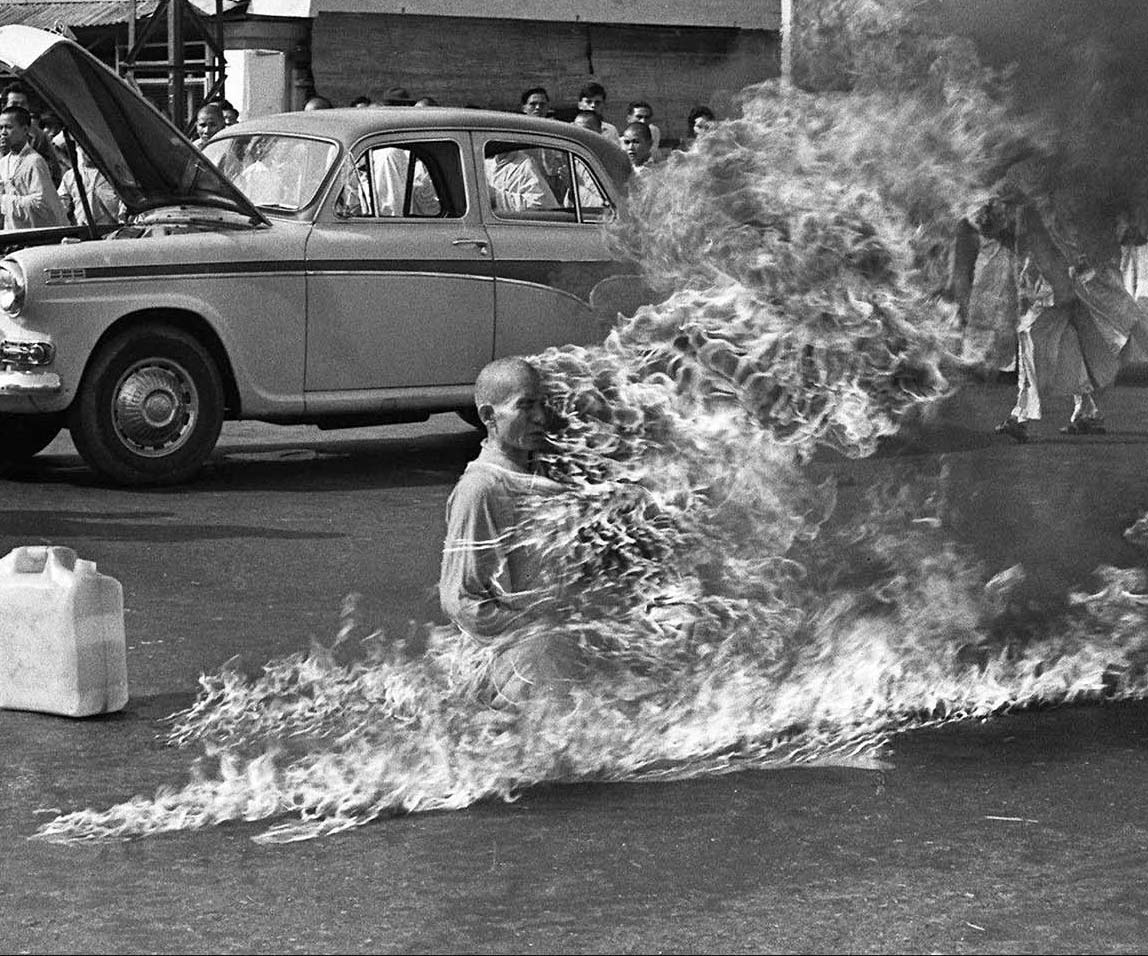
(Browne, 1963)
https://rarehistoricalphotos.com/the-burning-monk-1963/
Connotation is the feeling or ideas that are suggested or implied from an image. Denotation is the contrast to Connotation. It is the specific meaning of an image which do not include feeling or ideas that an individual may associate with it. The denotation is the signifier (things that give the image meaning). The connotation is the signified (a persons thoughts on the image). Although Images, words and sounds can be read in different ways by different people.
When asked to find a complex image, I struggled for quite a while. It wasn’t until recently while I was listening to ‘Rage against the Machine’s‘ self titled album, and I looked at the album cover which always intrigued me. A photo of a burning monk. I wanted to know more about this photograph and the story behind it. So I took the opportunity to discover the context behind the photo and write a blog about it.
In this Photograph, A man can be seen on fire with a jerrycan behind him, in what looks to be a busy intersection with a large crowd of bystanders. This is the denotation, or what is literally there.
Malcom Browne captured this photo in 1963 in Vietnam. The man in this photograph was a Buddhist monk named Thich Quang Duc. He committed suicide by self-immolation in a busy street in Saigon. He burned himself to death to protest the treatment of Buddhists by the (at the time) president of Vietnam. Now with this context, we can start to associate feelings and ideas to the image, as we understand the motives of the Monk.
The interesting part is how some people interpret this image. Without context it may be seen as violent and brutal. This relates to the linear transmission model which consists of: Sender > Message > Receiver. The sender being Malcom Brown (the man who took the photo), the message, to protest against the discrimination of Buddhists in Vietnam, and the receiver, which was the world. The problematic element of the linear transmission model is that the receiver may decode the message differently than how it was intended. Not every person is informed on why this monk committed suicide by lighting himself on fire, or even why he’s on fire to begin with. Fire is seen by many as destructive and chaotic.
While an image may have an intended meaning to it, not every person may see it the same way as another. We all interpret things differently.
BCM115 Photo-series
Heavy passion

Download 2019, Sydney Australia
https://www.instagram.com/p/BvS37O9AM5M/?utm_source=ig_web_copy_link
Its the 9th of March. Heavy guitar riffs can be heard in the streets of Parramatta. My destination was the location those riffs were coming from. That destination? Download Festival 2019.
The heavy metal music festival had an impressive lineup with industry juggernauts such as Slayer, Judas Priest, Alice in Chains and Anthrax (with Ozzy Osbourne originally billed to play) just to name a few. Prior to Download, there wasn’t any major heavy metal music festivals (other than sound-wave which was cancelled in 2016), so a mate and I decided we’d go. We’d been to a lot of Triple J supported festivals before such as Falls Festival, Groovin the Moo, and Yours and owls but we had never experienced a heavy metal festival before and were pretty much going just to see Alice in Chains and Ozzy.
Our expectations varied and we weren’t sure if it would be for us. Safe to say that even though we knew hardly any acts performing, We enjoyed the hell out of Download.
The Atmosphere, People, and of course, Music completely differed from anything we’d experienced previously at any gig or festival we’d been to. Festivals like Falls offer a wide variety of artists and genres to choose from and leads to different vibes (which isn’t necessarily a bad thing). At Download however, every single person was there for the same genre of music. This was shown in the passion these people had when screaming out the lyrics with passion to Judas priest’s ‘painkiller’, or laughing and having the time of their lives as they threw themselves into circle pits during Slayer’s ‘Raining blood’ and
the bands performed with real passion and love for the music and their fans.
A lot of stereotypes lead people to believe that the heavy metal community is full of hatred and violence. This is certainly not the case. They’re some of the most friendly and caring people I’ve met and made me feel welcomed in a community I felt I had no place in.
Even though I knew almost none of the bands that played, I am truly happy to have been apart of Download 2019.
The Journey Begins
Thanks for joining me!
Good company in a journey makes the way seem shorter. — Izaak Walton

 Mitch's blog